
Weather: Low 76°F — High 98°F — Sunny A heat dome is sitting over Tennessee until next week, with no rain in sight. The days are getting shorter, and honestly, I think the plants are loving the shorter daylight during this heat wave.
I arrived at the Pickle Patch before dawn, which is getting close to 6:20 a.m. I am not getting up or leaving any earlier than I normally do. Winter will be here before long.
The water I can handle, since it’s free at the community gardens. I love my retractable hose. My system works like this: I have a one‑hundred‑foot hose that connects to the water spigot and attaches to the retractable hose connector. The retractable hose is in a casing and it swivels. I pull the hundred‑foot lightweight hose out. Ideally it should come out as you use it, but I am forever getting it stuck, so I just pull it all out since I need the full length anyway.
When I’m done, I go back to the unit, tug to have it start retracting, and I hold onto the hose to make sure it doesn’t kink going in or go too fast and break the nozzle. During the winter all I need to do is unhook it and take it home to store. I don’t like it staying out in the elements. This is my second year using it. It makes my watering fast and easy. No heavy hoses for me to lug around.
Watering: base‑only; new transplants 3 Mississippi; small tomatoes 3–5; large tomatoes 10; peppers/eggplant 5.
I started right to work while the sun was still thinking about rising, on my second raised bed — the Blue Lake pole bean bed. Yesterday I cleaned it out and had it mostly ready to plant. I was working through a problem. My first bed used an A‑frame trellis, but this bed already had a middle trellis, and I knew I wanted more beans than just one side.
I thought about adding another cattle panel, but the spacing was too small. I didn’t want to move the middle trellis, and I came up with this solution of using three smaller tall cattle‑panel tomato cages. They fit so well. When I planted them, the spacing on the cage was exactly six inches — just what I needed for my beans.
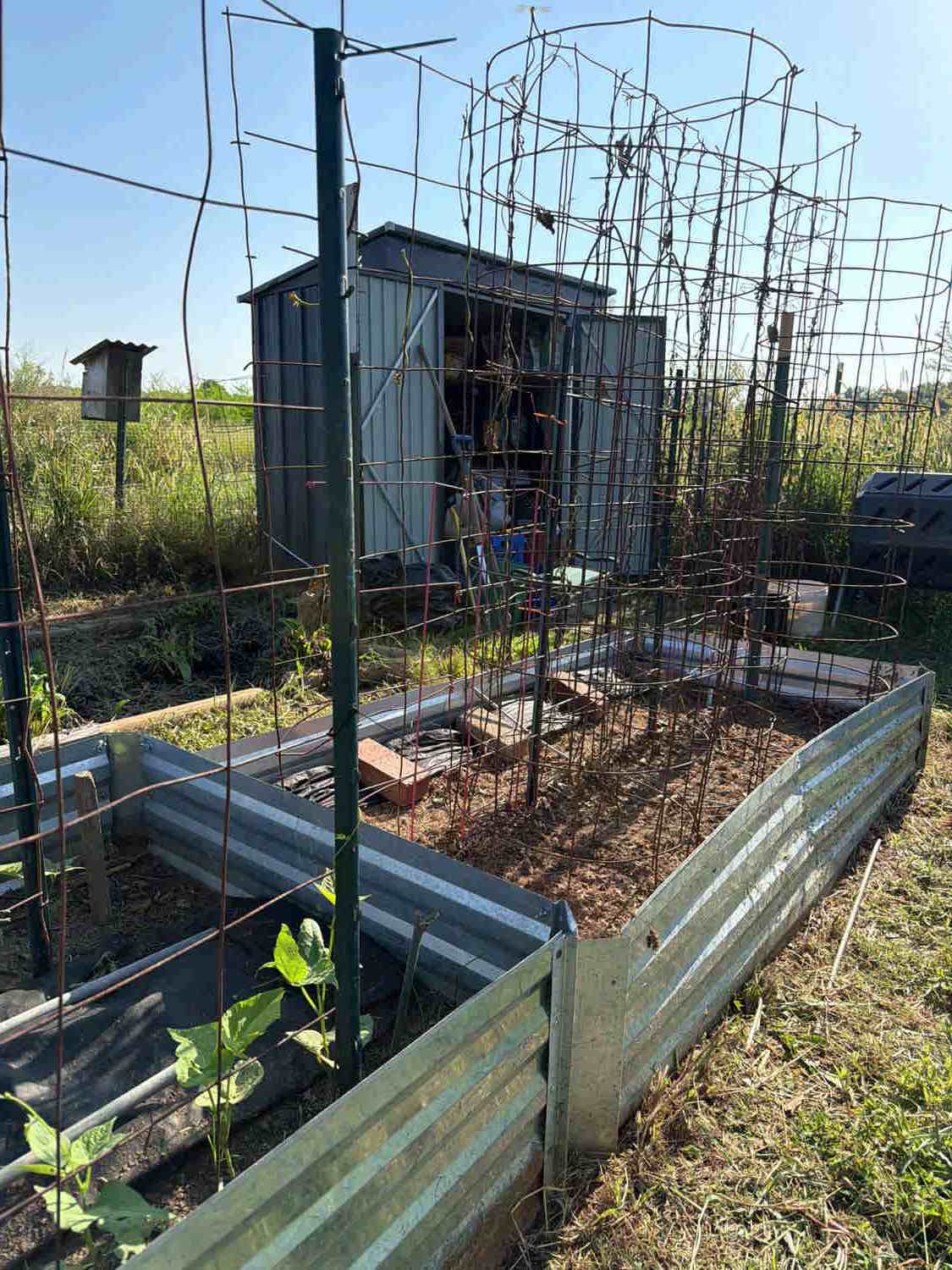
While I was working on the bean bed, Dianne — who I helped get a new plot since her original one was prone to flooding — stopped by. I showed her my garden, and she came for the cages I was getting rid of. I think I have about 130 tomato cages, and some I’ve already converted to squash or tomatillo cages. It is good to help others starting out. My motto: passing on the good deed someone did for me when I was starting out five years ago.
Before watering, I fertilized a few tomatoes that were starting to bloom with 8‑24‑24. This is done at this stage as the higher phosphorus and potassium help with fruiting. Then I watered eggplants, peppers, tomatoes, and squashes. I did a few more maintenance things, like weeding where the delicata squash was and laying boxes down to kill the weeds. And since the delicata was in the same row as the tomatillos, I started weed‑whacking from the other end, as the row needs some serious attention.
Tomorrow I will continue with this, as some tomatillos died and need to be cleared out, and a few others might be saved. I am hoping once all the weeds are out they can breathe again. Either way, the row will be tidy again. It’s amazing how quickly the weeds grew just inside the cages and along the planting row. The walking path hardly has weeds, as it was boxed and mulched.
I missed a day of harvesting okra, and boy do they grow fast. I had quite a few that I call “big honkers,” and as far as I know they are too fibrous to be used. You know if you squeeze it and it makes a crackling sound. I tossed quite a few in the compost. I still had plenty to give to my friend Dorothy. She loves okra. She said she will make okra and tomatoes and also freeze some in half‑inch slices to be added to soups, etc. I told her we serve our okra and tomatoes over thick grits, and asked her to let me know when she needed more, as I have plenty. I also said I’d let her know when other veggies are ready.
It was getting past the witching hour where the heat advisory starts, and I parked “pretty blue” under the tree by the Learning Plot. While watering, I saw these bugs and also a few bronze eggs on the sunflower leaves. I used duct tape to quickly take off all the eggs at one time. It works like a charm, and I highly recommend it. The bugs I discovered are stink bugs that are not as bad as the squash vine borers but can do damage. They do not respond to BT, spinosad, or DE. My best defense for stink bugs is a bucket of soapy water to throw them in or squish them — which I am not good at.
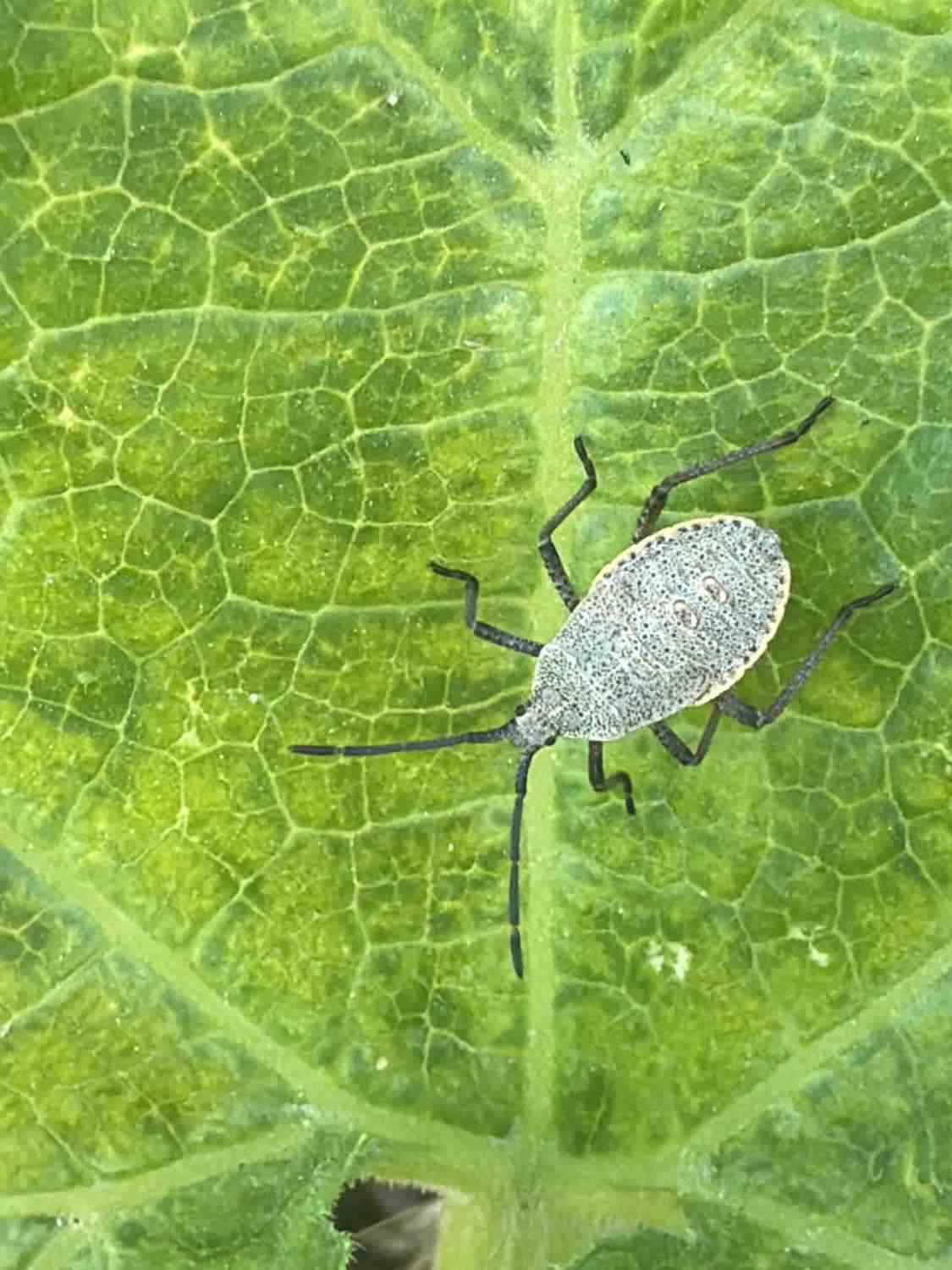
Tomorrow I will continue to finish the tomatillo row, tidy the cage area so I can put all the dried dill in their new bed, and douse any stink bugs in soapy water. Next year I think I will be seeing dill pop all over the place, but I don’t mind. I can leave it where it grows or move it to a new dedicated bed.
Till tomorrow, stay hydrated.