
A hazy day. Low 73, high 93. Today was a Code Orange ozone advisory (unhealthy for sensitive groups). Even though I am healthy, it is still good to pay attention to any warnings if you are going to be outdoors for a period of time like me.
Today I was there after dawn, and the first thing I did was stop to take photos of Gerald’s tomato suckers for this post. I noticed another transplant I gave him yesterday is a little droopy—it is either stressed from the heat, or it could be a cutworm. This transplant was a lot smaller than the rest.
My remedy for the droopy tomato is the old landscape fabric pinned on the southwest side, hoping a little shade will perk it up. If it is not the weather, then it could be a cutworm, and I am sorry to say it won’t recover. The only way to protect from cutworms is at planting time by wrapping a toilet roll around the stem and poking it down into the soil, leaving just enough sticking up so the cutworm can’t wrap around the stem and gnaw on it. A very inexpensive fix.
Once done, I went back to my plots to start my easy day—fertilizing. June tomatoes got 8‑24‑24. July tomatoes received a boost of 2 cups Black Kow, 1 tsp gypsum, 1 tsp kelp, and two handfuls of chopped fresh bocking 14. Ginger, horseradish, blackberries, and strawberries got triple 13.
If you are wondering what bocking 14 is, it is sterile comfrey. The leaves are a low nitrogen, moderate phosphorus and high potassium. I started with this patch in my Pickle Patch, and last year I took 3‑inch root cuttings and planted them on the north and south sides of the Back 40. Not only do the plants benefit, they also have flowers for the pollinators. A win‑win plant.
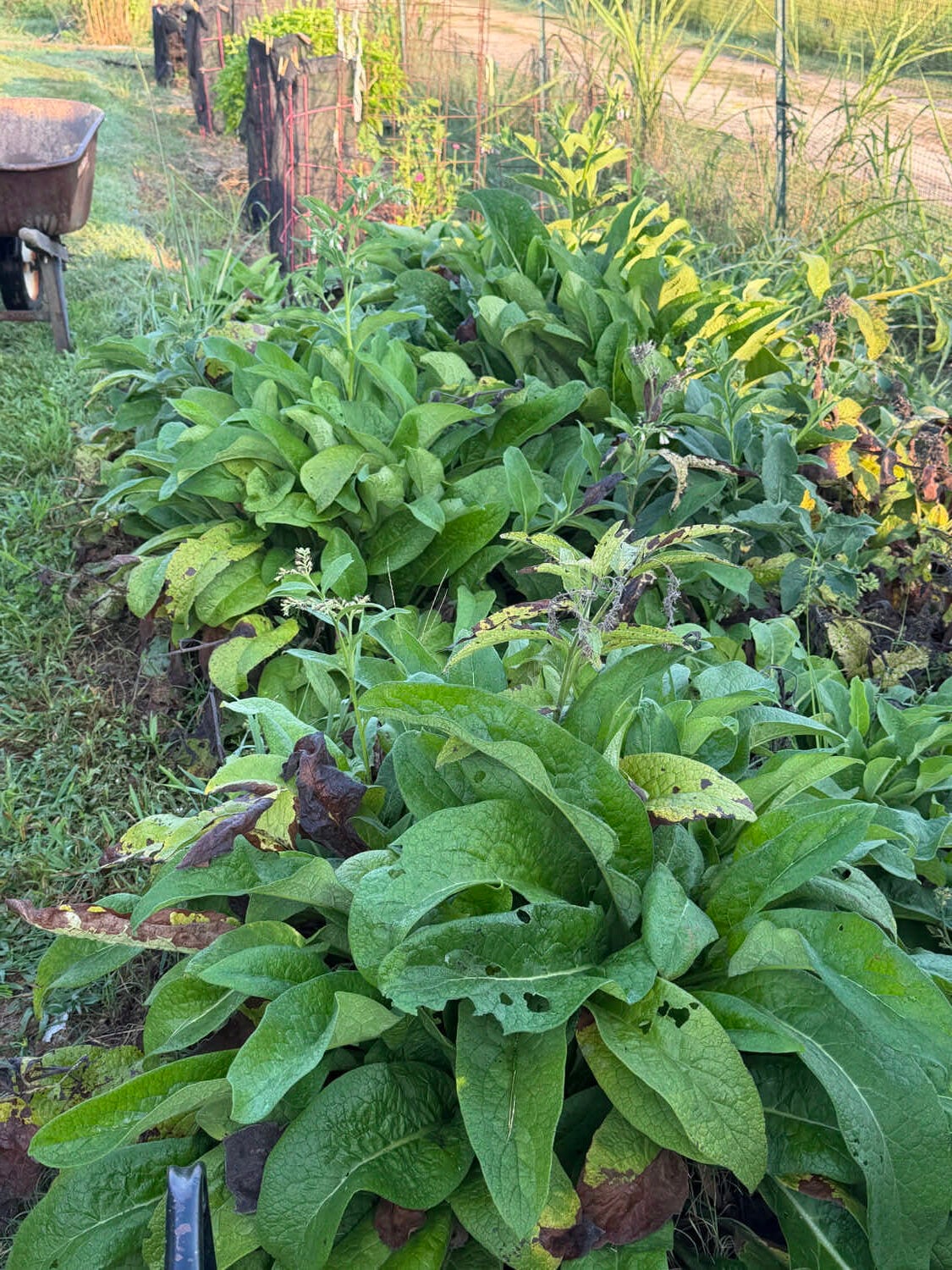
Once I was done fertilizing, I watered everything I had fed, plus the beans and cucumbers. After this I harvested the okra. I’ll dehydrate it tomorrow for my sister. If you are interested in the recipe, you can find it here.
Now to report on my tomato sucker trial. All are looking good after being planted. Gerald’s planting method is simple: dig a small hole, put some Miracle Gro soil in, and some 8‑24‑24.
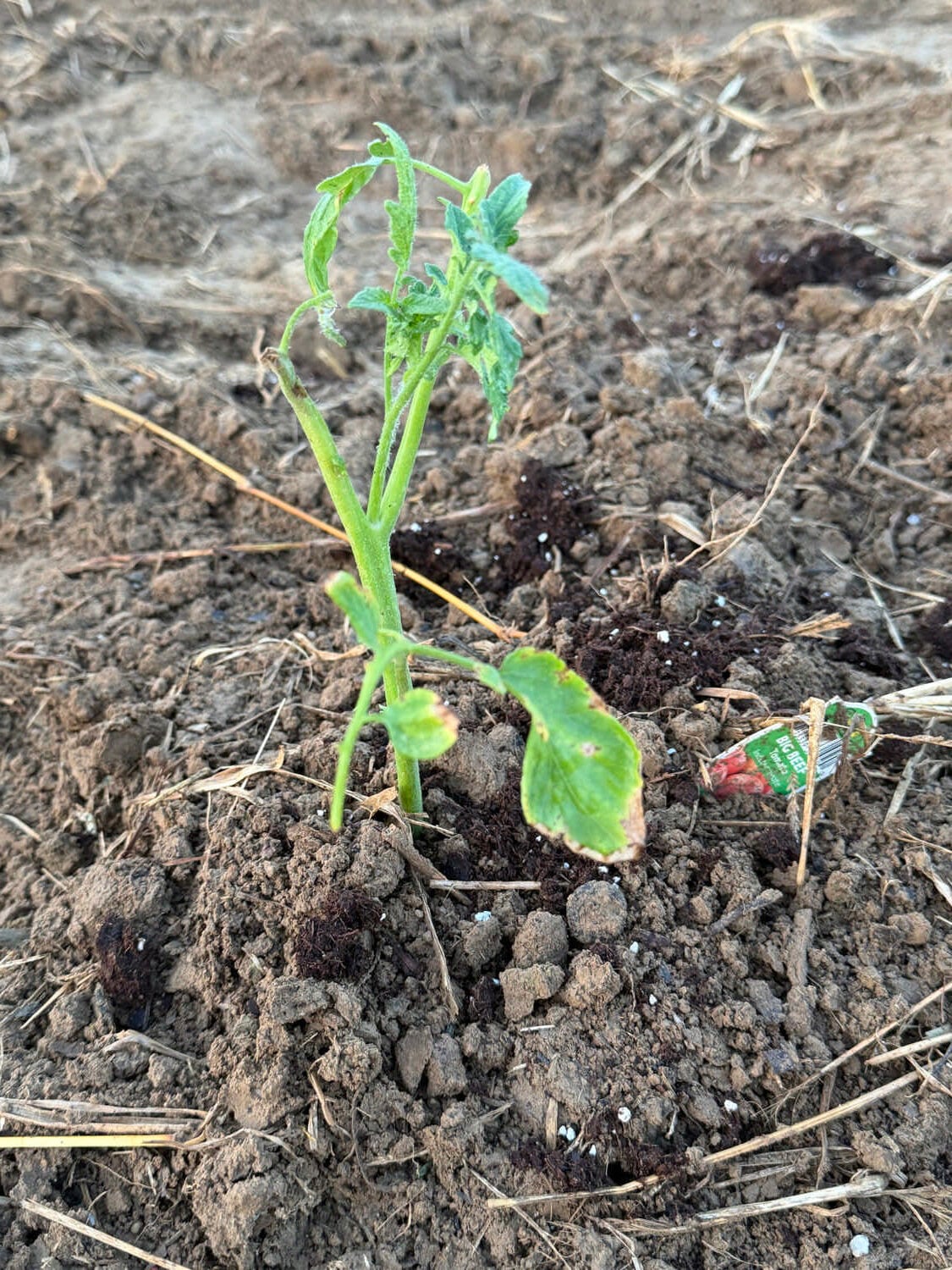
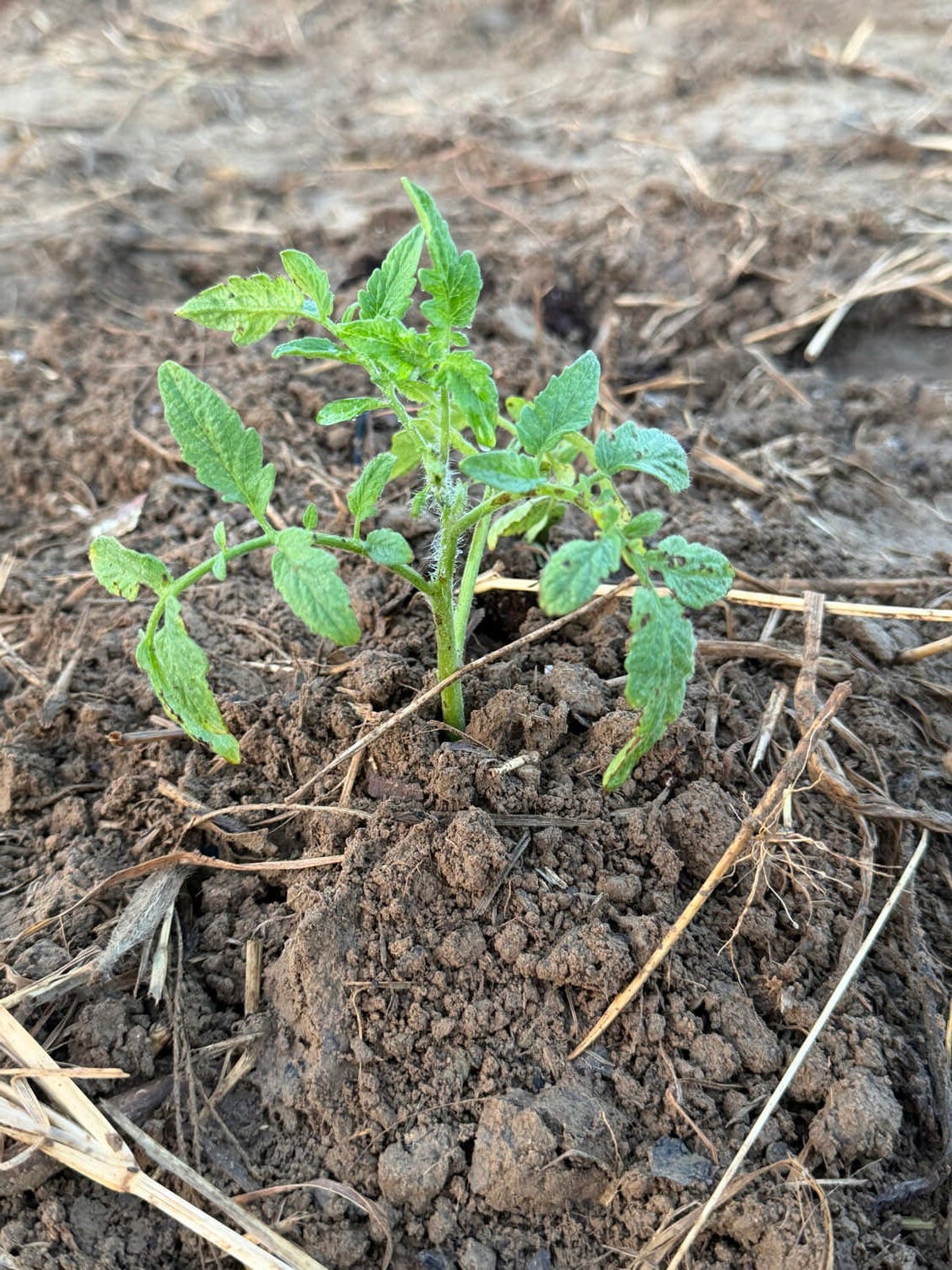
Mine is a little more elaborate: dig a hole about a foot deep, as my soil is clayish, then fill back in to where I want to place the tomato. I then mix some native soil with my amendment of 1 cup Black Kow, 1/2 cup homemade compost, 1/2 cup leaf compost, 1 teaspoon gypsum, 1/2 teaspoon finely ground eggshells, 1/2 teaspoon kelp meal, and 1 teaspoon cinnamon.
If the tomato is in either the Back 40 or Pickle Patch, I need to mound because of the way the water flows through my gardens, which are lower than Rudy’s Radish Ranch (RRR). You would think I was done, but no — I then put a light layer of chopped leaves, and this time, since I have the straw, I thought I would trial it as well. Each transplant automatically received the toilet‑roll collar too. Finally, the cage and shade cloth.
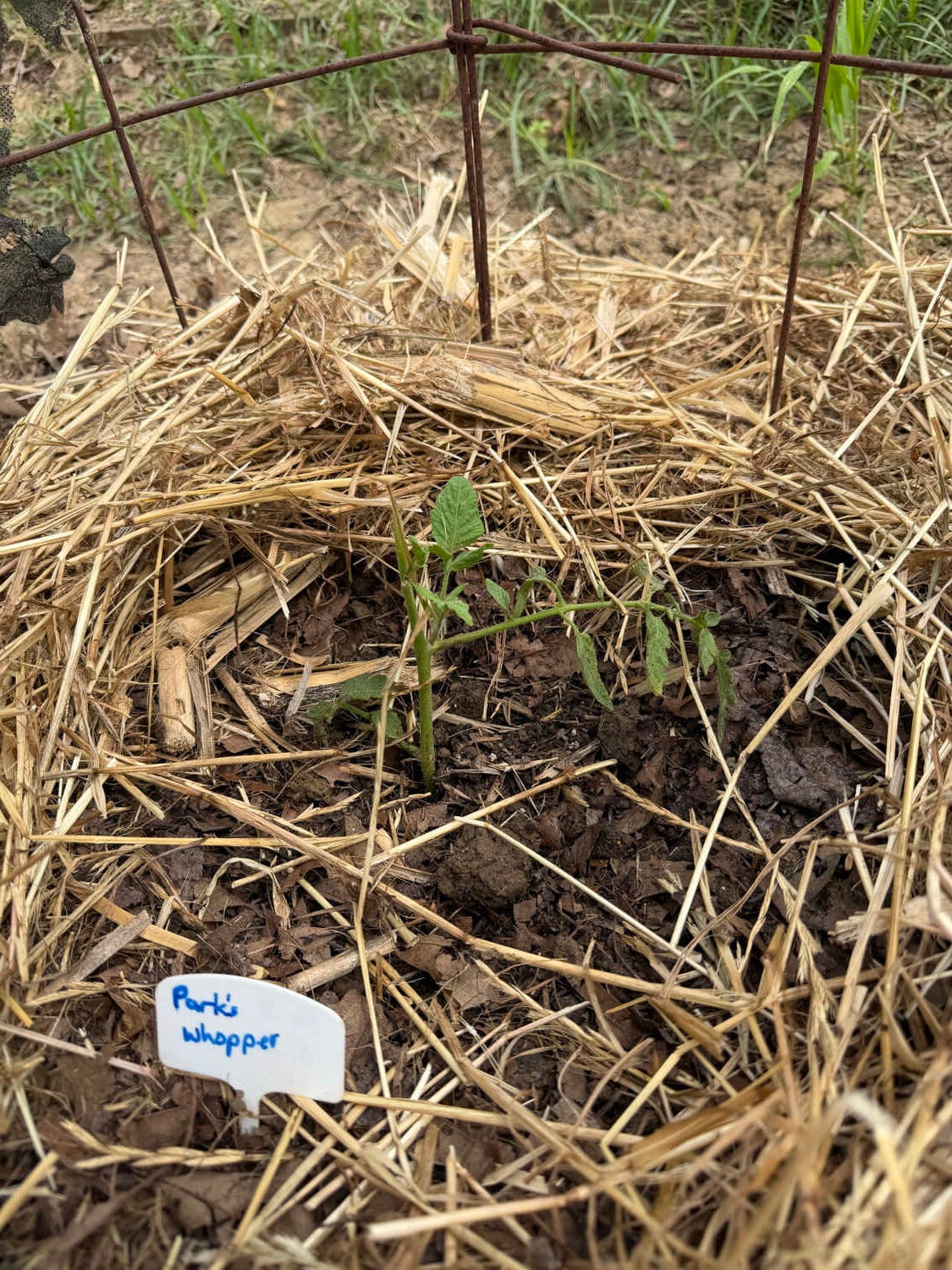
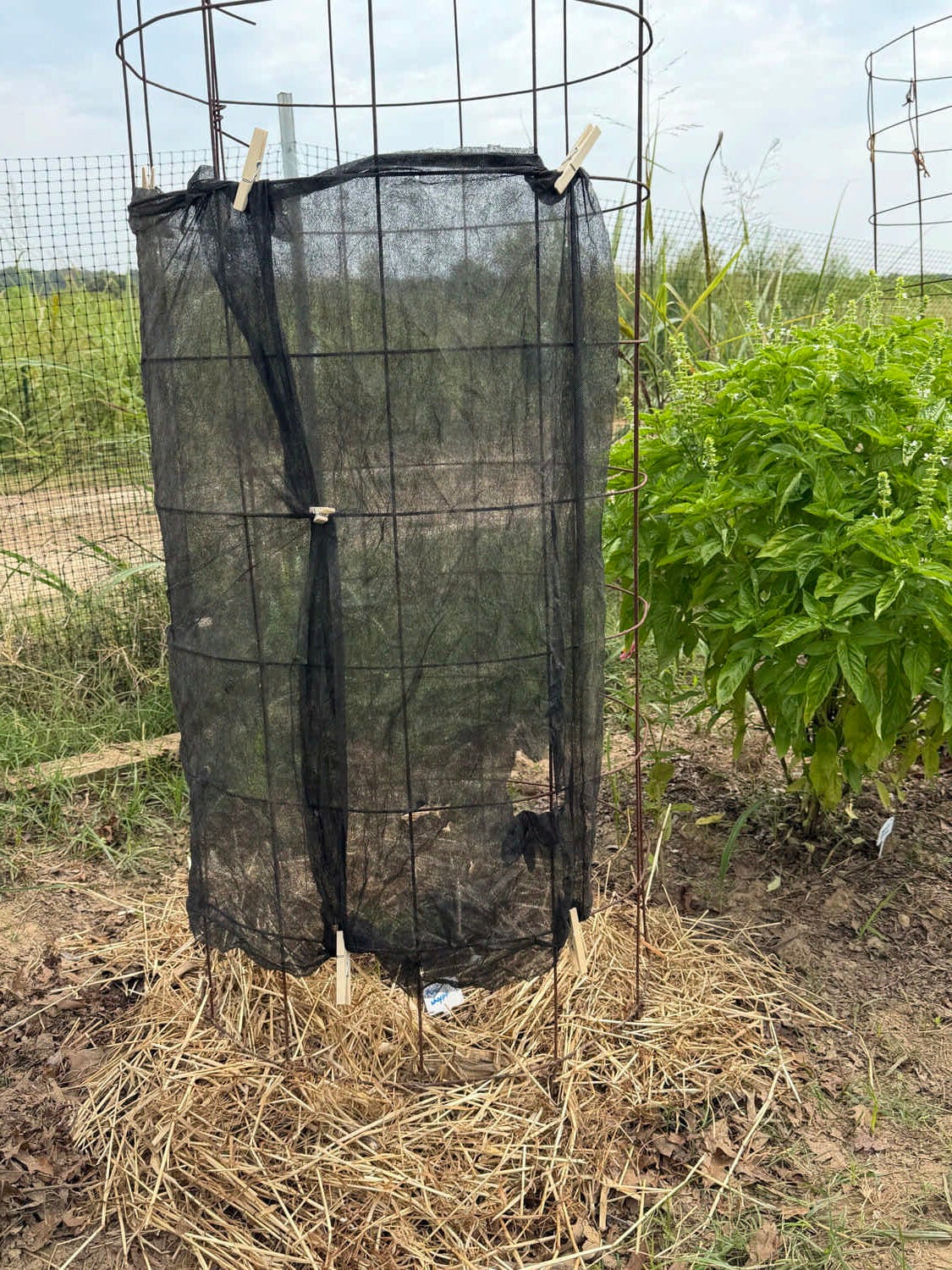
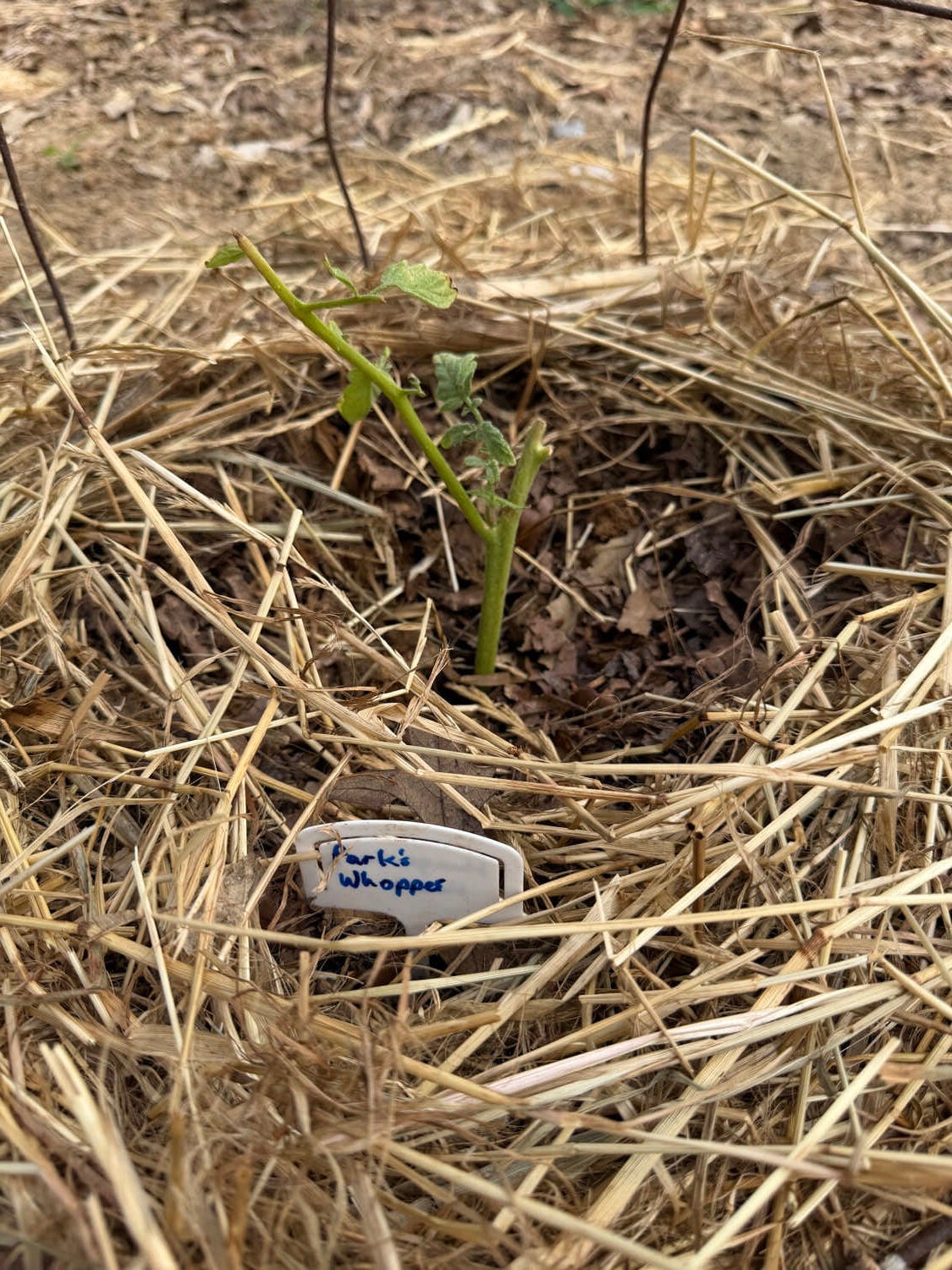
Now you are up‑to‑date on the tomato suckers, and I look forward to reporting on their progress. Now that I know how to do this, I will do suckers for my fall batch or when some plants are struggling and I need to have a quick backup. Seventeen days is a much better turnaround than starting from seed when time is of the essence.
Today was a productive day catching up on fertilizing and light watering. It is funny — every time I water, it rains. It reminds me of that saying: if you wash your car, it’s going to rain. Anyway, I get a day off tomorrow from the Pickle Patch, and because of the rain, I already know what Sunday holds — copper fungicide, BT, and Spinosad, the trifecta. At least it isn’t going on every plant.
Until the next update — happy gardening.