
Weather: Low 78°F — High 96°F — Sunny
Still a heat dome, and you know what that means. I was going to spray today, but I didn’t because it’s way too hot and could burn the plants even early in the morning. The minimum safe low for spraying is 74°F. At sunrise it was already hovering around 80°F.
It looks like after it rains, I can spray the next weekend. By this time the plants will need their shield again. Good thing they still have the protection on, since I don’t overhead water.
Today I did my usual morning walk, and the last few days I have noticed how my tomato plants are thriving with no septoria or blight. One Better Boy, which I thought was “done for,” even has new growth. I’m thinking that the disease pressure on that tomato — and a few others — could be due to their roots being starved for oxygen, as our rains several weeks ago were not light sprinkles but gully washers, with two inches in a matter of an hour or so.
That tomato I will mark in Rudy’s Radish Ranch is in a slow‑draining clay hole, and I’ll also look and mark which tomatoes in the Back 40 are not doing well. So far, the Pickle Patch tomatoes are all growing big, even the August transplants. I guess when the roots are healthy, the plant is healthier. This will be something to keep observing and noting on the holes.
Once done observing, I got my tools out, and when I went to get the weed whacker, I noticed it was missing the battery. This meant I couldn’t knock the weeds off the landscape fabric to help make the fabric come up easier. This fabric did not come off nicely like the other cage area did.
Even though the first part of the cage area was hard because of the weeds that grew into the fabric, the next section, which is about 6 feet wide and 25 feet long, was originally my staging area. I will never do this again where you lay the landscape fabric down and then put a lot of mulch on top of it.
For this project I am only going up to where the middle walkway starts. Trying to pull it up was hard. I scraped a lot of the mulch off. I am hoping to till the seasoned mulch in, as some is more than 3 years old.
Tomorrow, I plan to weed whack the area for the cages and then I will use my more natural way—boxes and grass to mitigate the weeds. If I ever decide I don’t need the cage storage area, it will already be a perfect bed for planting. The only thing I will need to do is periodically, probably in spring, put a new layer of boxes and grass on the base layer. Two new 8‑foot poles are in with a new distance of 13 feet. It should hold about 28 cages, and the new 4′ x 6′ bed is my new dedicated dill bed.
After this high‑energy zapper chore, I took a much‑needed break. If you are interested in what I eat for snacks, I have a bento box that has one banana, salted pistachios, and some fruit—usually strawberries and blueberries. My hydration bottle is an insulated 64‑ounce bottle where I add 1/4 teaspoon salt and 1 scoop of Walmart’s brand canister of lemonade powder mix. This is my take on name‑brand hydration drinks.
The last major chore I wanted to get started is the calendula pockets in the flowering plant border next to Rudy’s Radish Ranch. I am using plants to help slow the flow of water coming from RRR’s landscape fortress fabric runoff. Next year he will be back, and he is already planning to put another layer on his fortress.
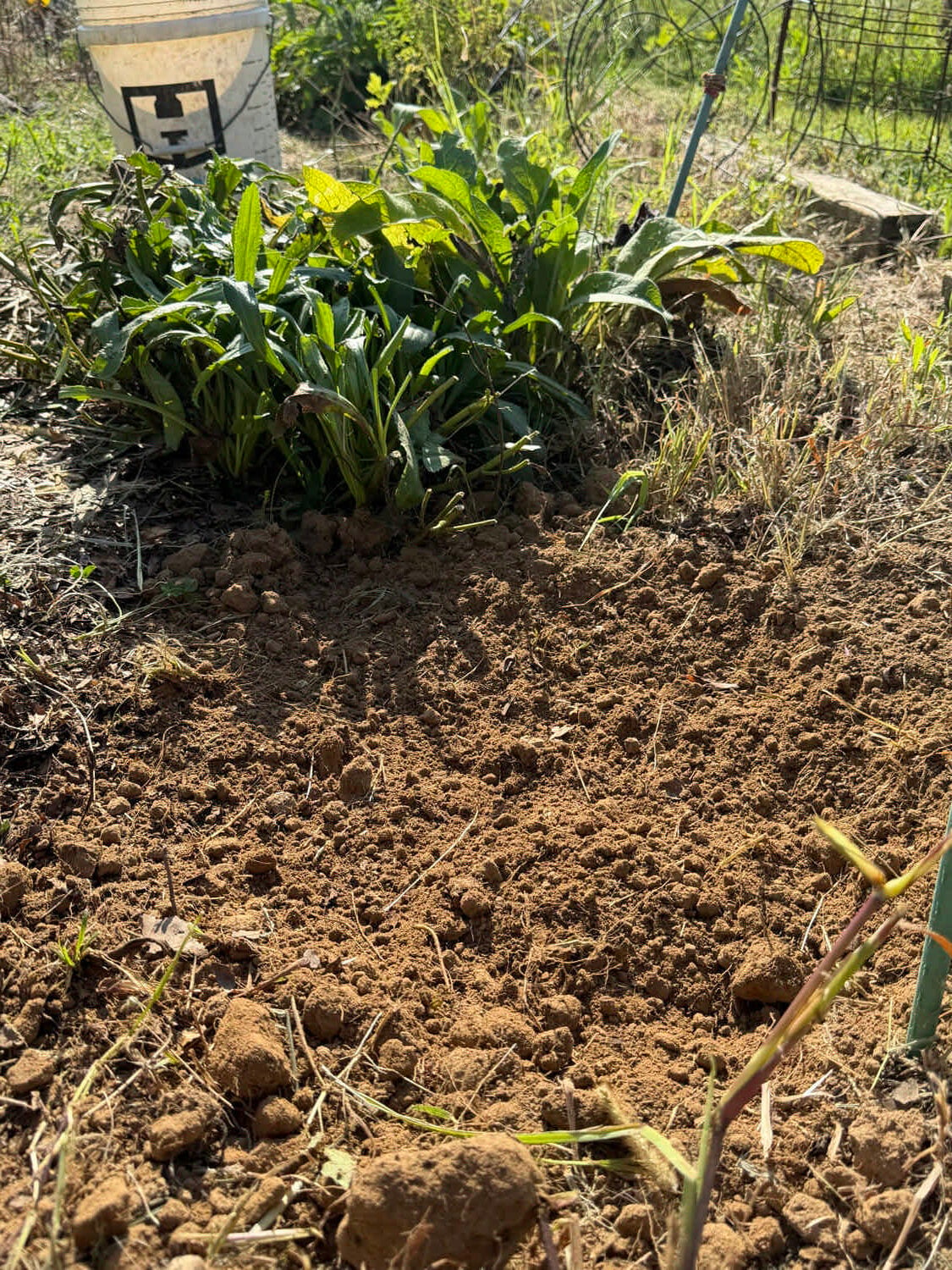
I am putting them on the west side of either the bocking 14 or the shasta daisies. The calendula in zones 7b or 8a Tennessee is too hot for summer calendula. They will do better in fall and spring. My goal for fall calendula is to flower and reseed for spring. This row is very clay compacted and I had to use my spade fork and then my drill auger. It will need some amendments like my compost, 2 tablespoons for fast acting gypsum and a little spent dried coffee grounds. Then I just sprinkle the packet and lightly cover with a little soil and lightly press in. Once sown only sprinkle with a little water.
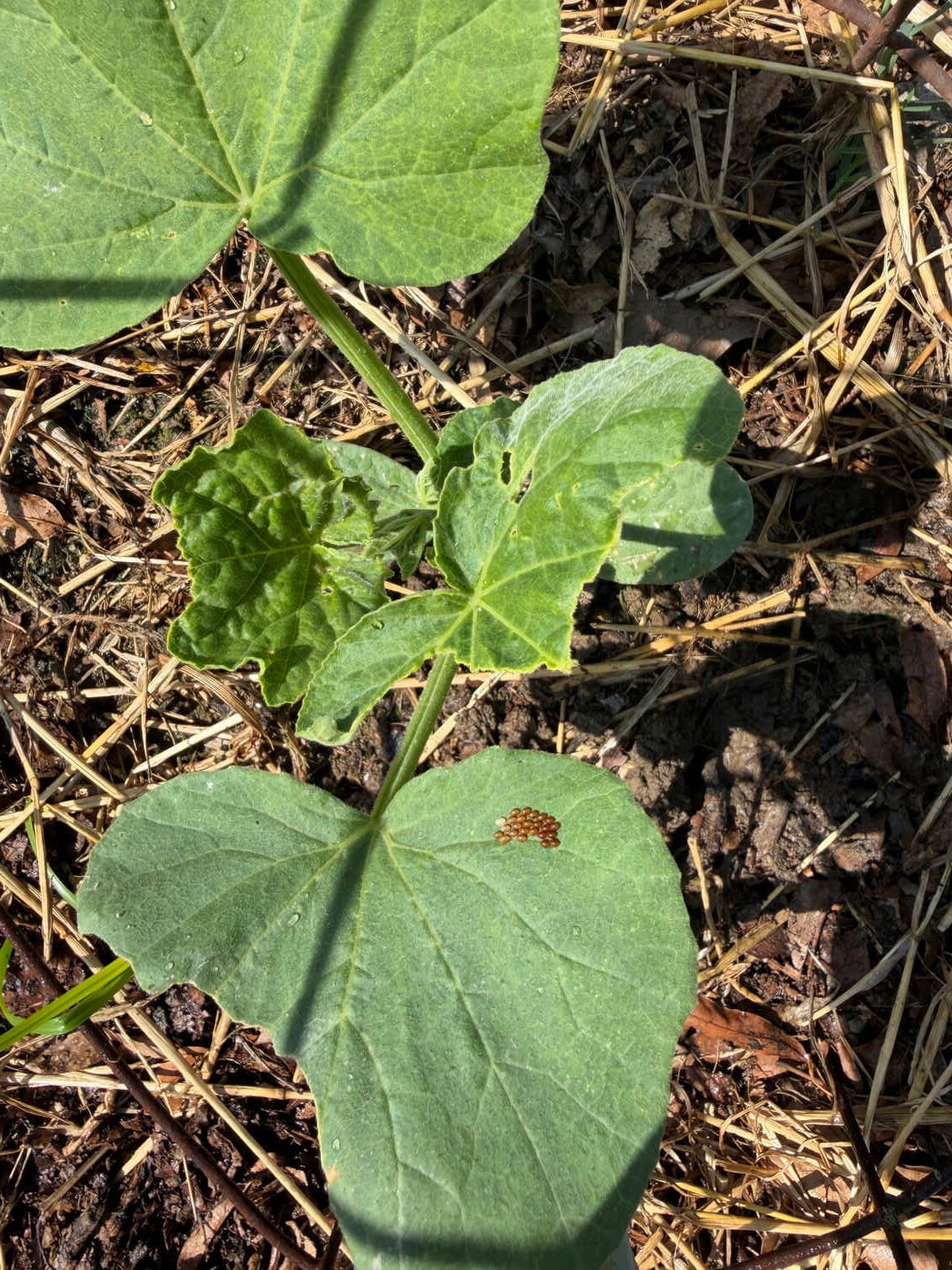
Today was watering day and the only veggies that are on tomorrow schedule are the cukes in RRR, cantaloupe and tomatillos and of course the Blue Lake pole beans. I also watered the Learning plot and found some more squash bug eggs. This time I even found eggs on my new butternut plant that was just transplanted on Monday.
You know what I harvested—yep, okra. A 70‑foot row takes about 15–20 minutes, and during that time I like to listen to gardening videos. Has this ever happened to you? You think you’re watching a real person, but when you go to their website and read the “About” section, it turns out he’s an avatar. I thought something was fishy when he kept saying ain’t over and over. Not many people talk like that in gardening videos.
He might have good gardening tips, but are they real tips he actually did, or just made‑up content based on research? Who knows—maybe other videos are avatars too. Would you continue to watch? For me, I don’t plan on watching anymore now that I know. He’s not real, not doing real gardening. He’s just researching and making videos with no practical growing.
I made a few videos myself, but video work and editing take too much time with my gardens. That’s why I blog (boring + log) instead.
I keep it real in the dirt.