A cloudy, beautiful day with low humidity — at least for today — before it starts building again tomorrow. I’ll take this day. The low was 72°F, wonderfully cool without that humidity pressure, and the high stayed under 90°F at a breezy 85°F. I loved working in the garden today and got a lot accomplished.
I arrived before sunrise, which was at 6:01 a.m. The days are getting shorter, and next month I’ll have to start planting fall crops. Isn’t that crazy to think about?
Since I mentioned in my last post that I needed to spray BT (Bacillus thuringiensis — an organic caterpillar control for fruitworms, hornworms, and other worm pests) on the June tomato transplants — as I spotted little fruit worms in the RRR and the Learning Plot — I did that first thing. I also sprayed the peppers and eggplants, and then headed over to the Learning Plot to spray those tomatoes as well.
Back at my plots, I mixed ten containers of my soil amendment — the same blend I used on the June tomato transplants: 1 cup Black Kow, 1 cup organic compost, 1 tsp gypsum, 1 tsp kelp meal, and a small handful of coarsely dried Bocking 14 (sterile comfrey).
There were four April tomatoes that still look like they might produce, so they got the amendment too. Then I gave the six tomatoes in the Learning Plot their amendment as well. I didn’t run back over there immediately, but decided I’d do that and weed‑whack the plot on my way out.
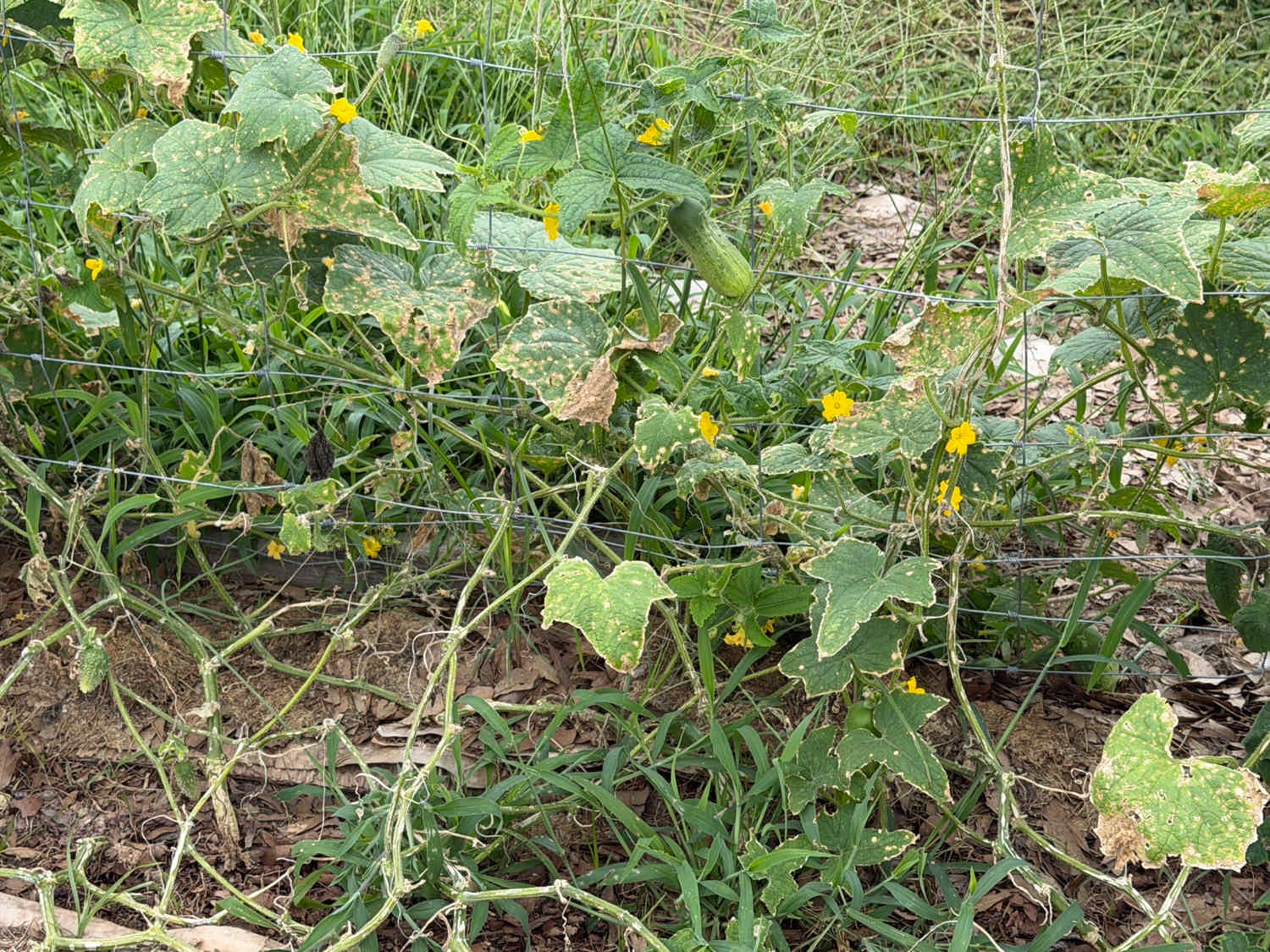
Next chore: mowing the walking paths of the Pickle Patch. I couldn’t take those tall weeds any longer. I let them go while I was planting the fall tomatoes, but today was the day. I mowed behind the 11‑foot trellis as close as I could get, because my next job was removing the old cucumber vines. They never climbed the trellis the way I expected and were not good producers. A good thing I didn’t rely on them for dill pickle canning — I’d still be waiting or planting more just to get a decent crop.
I pulled all the vines and weeds by hand and filled a wheelbarrow. My plan is to till and plant soon with the Chinese beans, but I need to decide tomorrow if the ground is dry enough. I also have to keep an eye on the potential rain that might hit the Pickle Patch Saturday morning. I’ll make my decision after I hear the weather forecast. My phone app gives me weird weather that can’t be counted on.
Once everything was cleared out, I weed‑whacked behind the trellis. I’ve decided I need some brown boxes back there to keep the weeds down. I originally thought my flowers would grow behind the trellis with the cucumbers — a great idea — but my two‑week vacation let the weeds move in. The weeds are vicious. I tell new gardeners that they must have a plan for the weeds. I think I mentioned I am trying to move my garden to be no‑till. I am not there yet, but boxing, mulching, Amish compost, etc. is my progression toward that goal. Each year my soil looks and acts better, but it is still a long way from being truly no‑till — and that is okay.
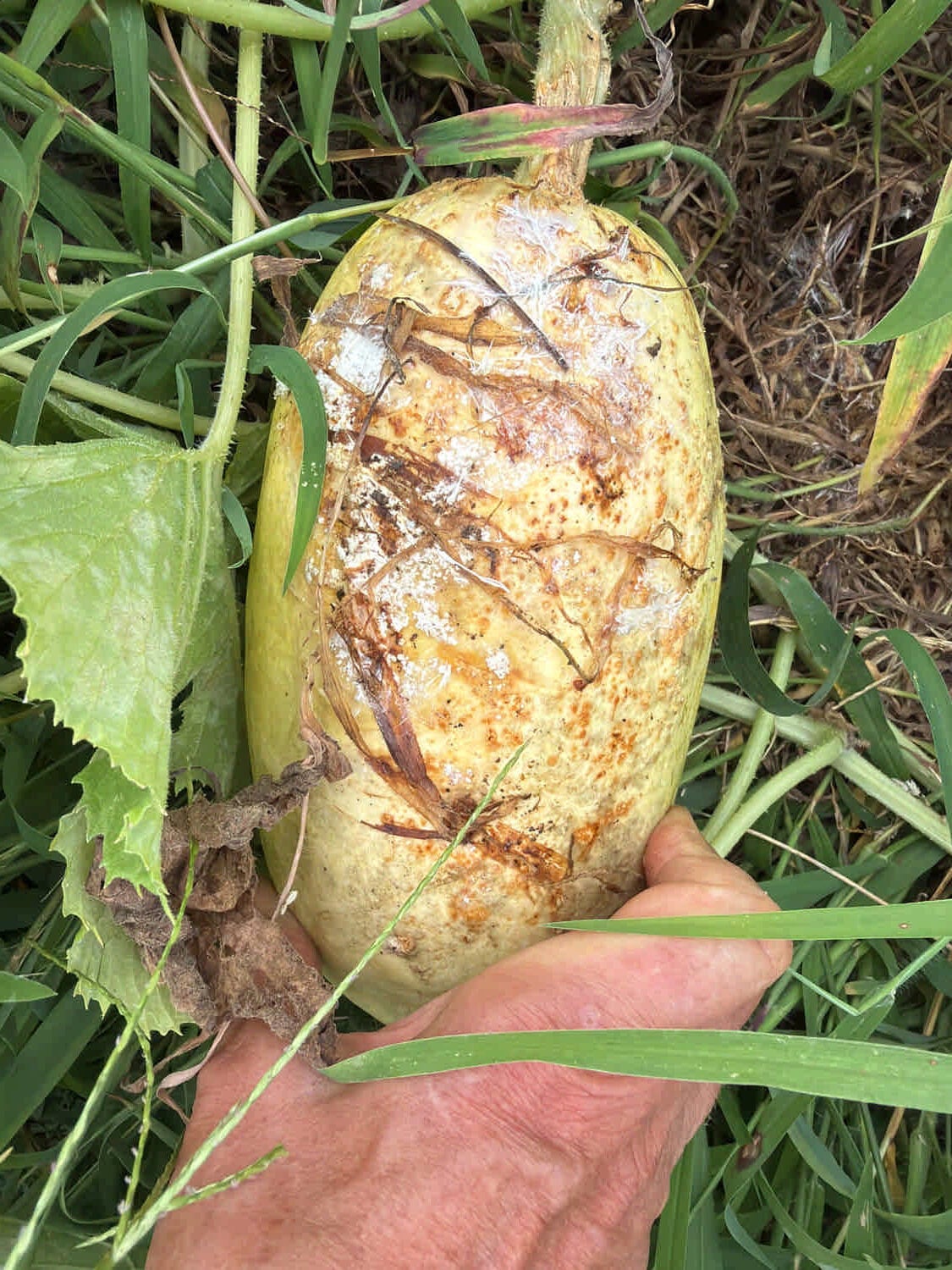
Some disappointments today: the spaghetti squash and delicata were rotten on the bottoms. I guess I need to work on recognizing the signs that they’re truly mature, and maybe rotate the squashes more often. The same thing happened with one of the watermelons. I was putting up the “fork defense” — plastic fork placed 6 inches from the watermelon with the tines facing up, along with cayenne pepper spray and pepper powder — when I turned over the watermelon and saw the mushy little spot. Of course I took it all down to be used on the honeydew melon. I still brought the watermelon home since it wasn’t all the way through, and I want to see the inside anyway. I don’t think it’s ripe, but I’m curious how it grew — the structure inside.
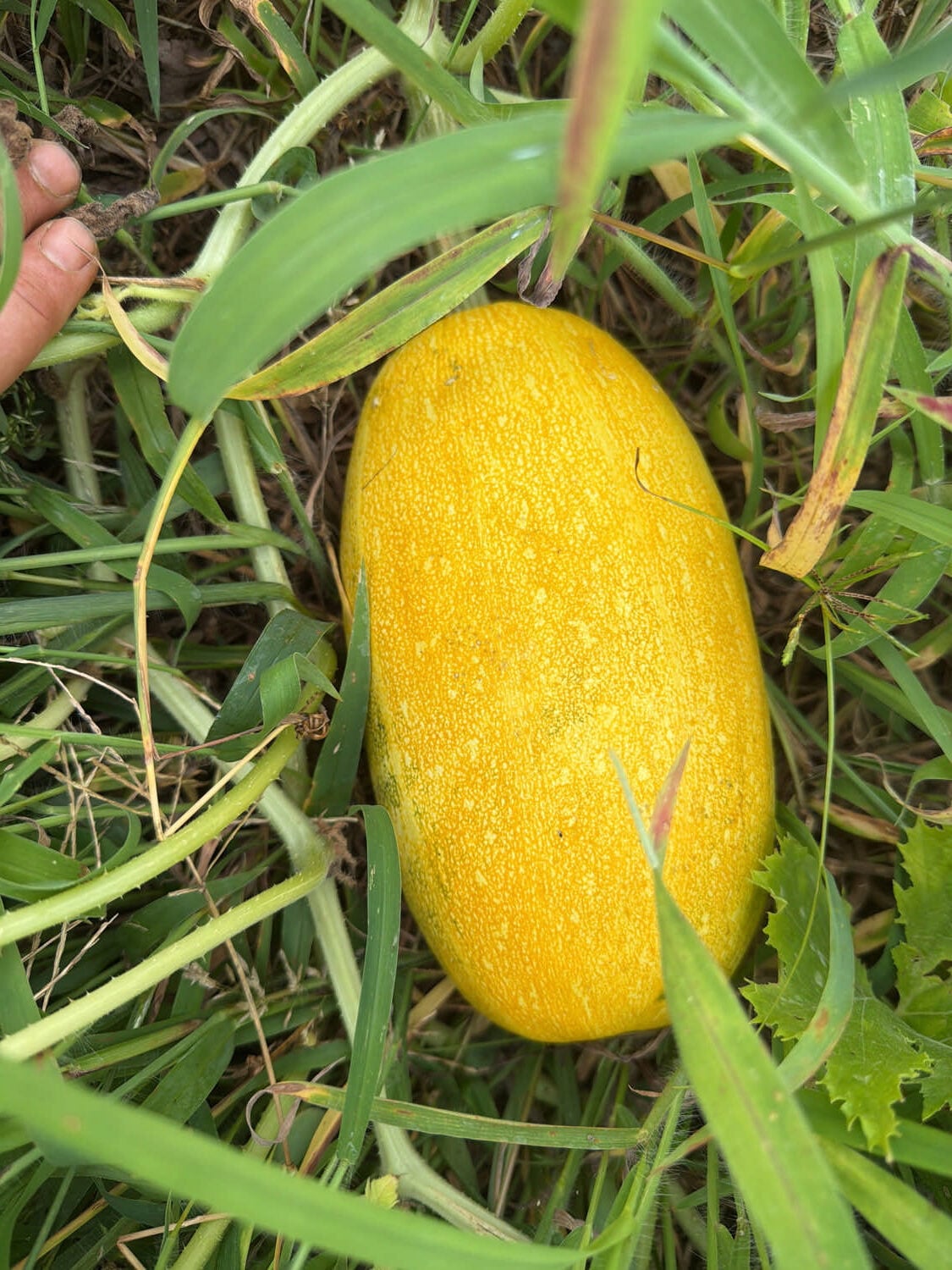
I also did the fork defense on what I think is a honeydew melon, which came from seeds I saved from a tasty store‑bought cantaloupe. Since that store melon was almost certainly a hybrid, the seeds didn’t grow true — which is why I ended up with a honeydew‑type melon instead of a cantaloupe. I like honeydew, and if it tastes good that is all that matters, right?
My White Spine cucumbers are about played out. I’m thinking of planting them again because they were the real producers for my 19 quarts of dill pickles. That is more than enough dill pickles for the year, but they were such steady producers that I’m tempted to put in a second round — especially since they can be eaten and used just like slicers.
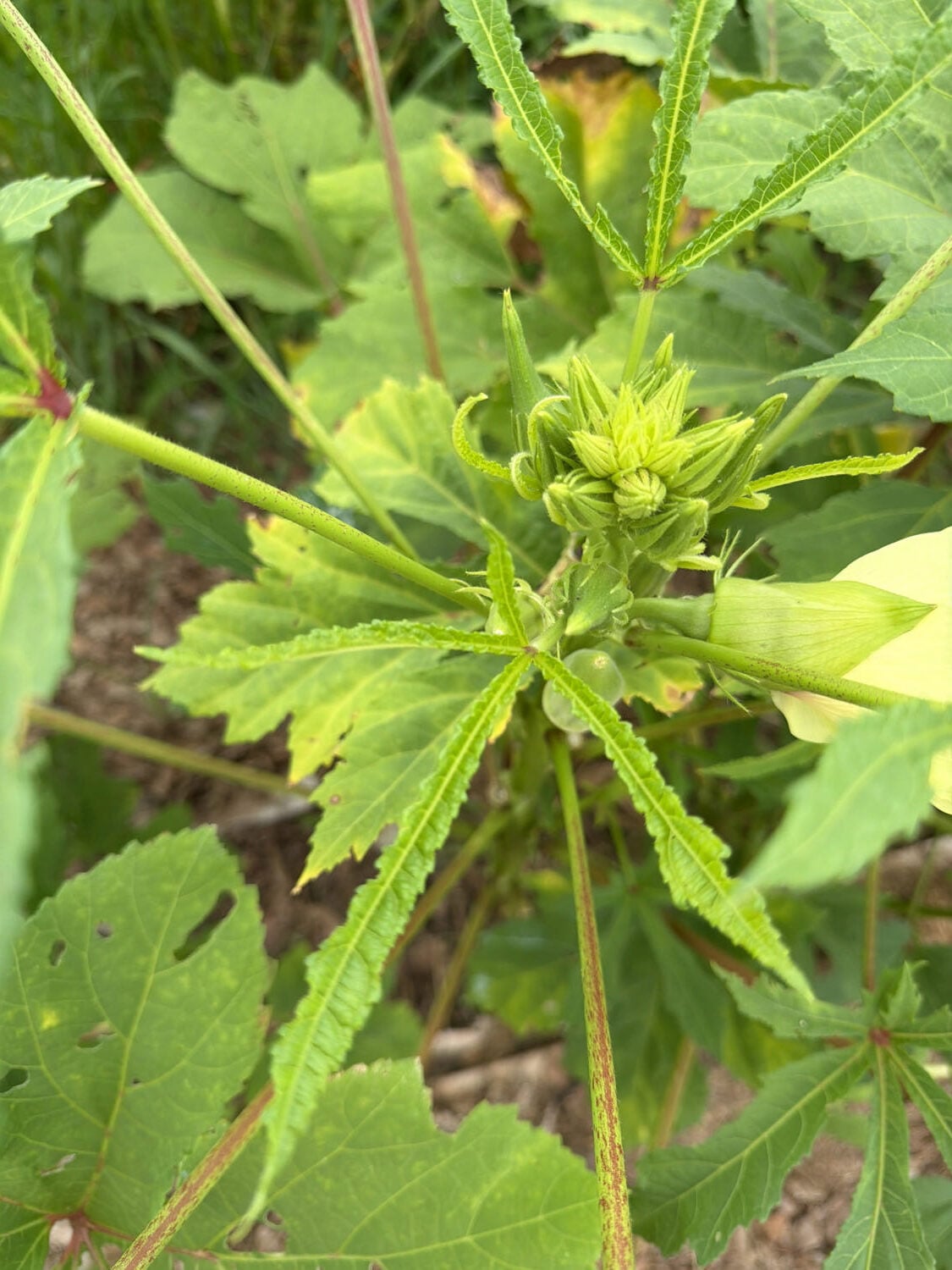
While picking the okra I noticed something has been eating the okra leaves down to thin strips — almost skeletonized — so I sprinkled the tops with DE and cayenne pepper for whatever is eating them, maybe Japanese beetles or grasshoppers. DE (diatomaceous earth) works great for this because it dries out soft‑bodied insects and helps deter leaf‑chewers without using chemicals. They have been feasting on the okra leaves because the leaves were perfectly fine yesterday.
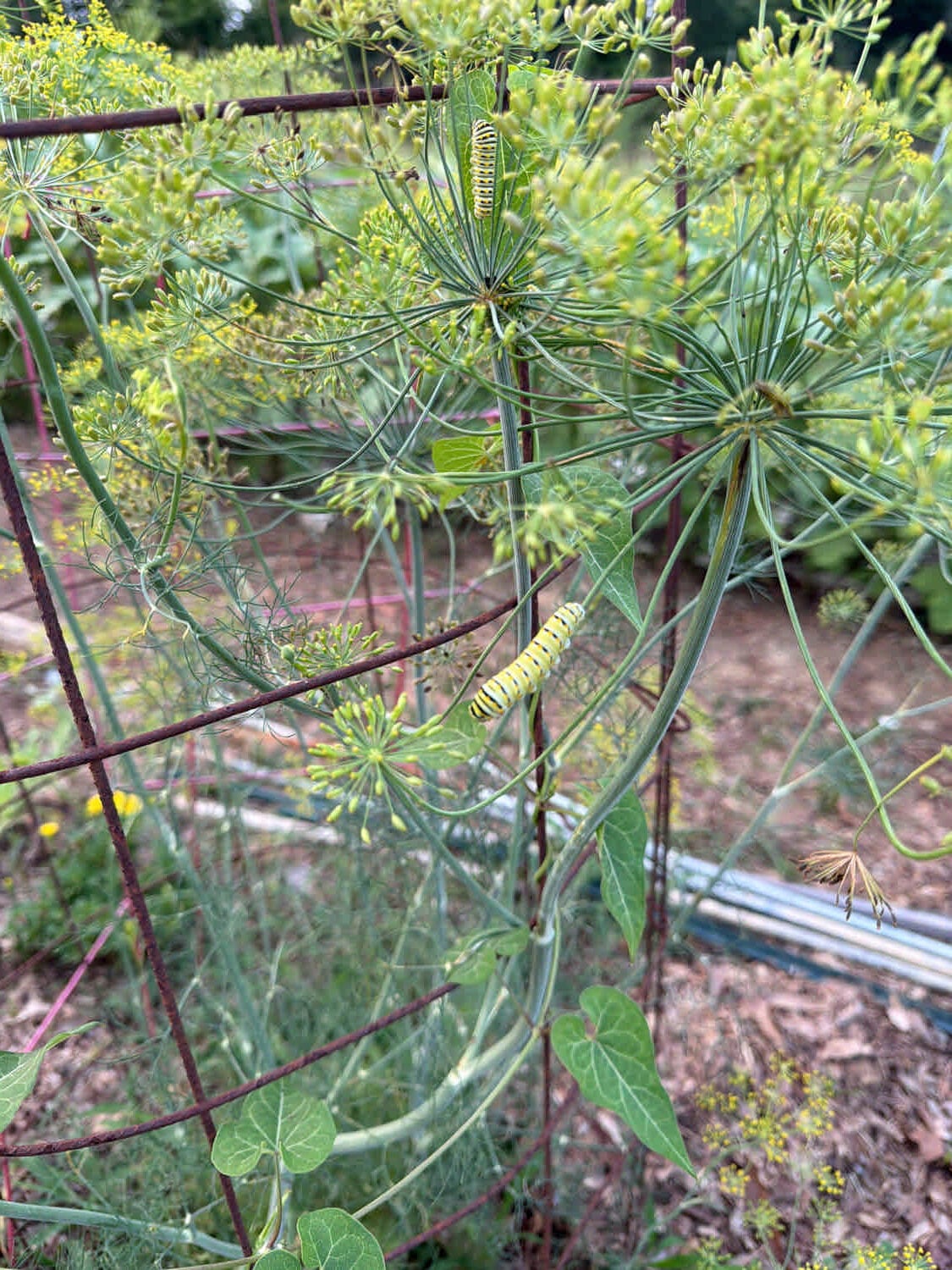
While doing one last walk‑through of the garden I spotted caterpillars on the dill. I had to use Google Photo Identify and it said they were swallowtail butterfly caterpillars — good pollinators. They might eat some of the dill, but trust me, I have plenty to spare just for them.
Time to close out this log with a few photos I took today and cook dinner (BLTs) with home‑grown tomatoes — and get ready for another day at the Pickle Patch.