Weather and first garden walk
Cloudy, a little cooler, Low 73F and High 88, but very humid. After opening the locked gate, I walked the entire garden. Right away I saw more cucumbers ready to pick and made a mental note that these will go in Rudy’s produce box today, as I am probably done with canning pickles. Even though these are bred for canning, they are delicious eaten just like slicing cucumbers.
Cucumbers: Picking & Cooking
I didn’t use two fatties that were a little yellowed in my canning. Instead, I sliced off the stem end to check for bitterness. They weren’t bitter, so I sliced them 1/4 inch thick and sautéed them with yellow squash, zucchini, chopped tomatoes, and onion. Who says cucumbers can’t be cooked? I used to think that and was proved wrong. Here is my recipe that not only uses the cucumbers from my garden, but also yellow squash, zucchini, and tomatoes. The only vegetable not from my garden is the onion.
Garden Sauté — Cucumbers, Yellow Squash, Zucchini, and Tomatoes
Ingredients
2 small cucumbers, sliced 1/4 inch thick
1 yellow squash, sliced 1/4 inch thick
1 medium zucchini, sliced 1/4 inch thick
1–2 tomatoes, chopped
1 small onion, sliced 1/4 inch thick
1–2 cloves garlic, minced (optional)
1 tablespoon avocado oil or olive oil
1/2 teaspoon salt, divided
1/4 teaspoon pepper, divided
2 teaspoons butter
2 teaspoons lemon juice
Pinch of red pepper flakes
Directions Heat the oil in a skillet over medium‑high heat. Add the sliced onion and sauté until it begins to soften. Add the garlic, if using, and cook for about 30 seconds. Add the yellow squash and zucchini and sprinkle with half of the salt and half of the pepper. Cook for 3–4 minutes. Add the cucumber slices and cook another 2 minutes; they soften but stay crisp. Add the chopped tomatoes and the remaining salt and pepper, and cook 1–2 minutes until the tomatoes just begin to break down. Finish by adding the butter, lemon juice, and a pinch of red pepper flakes. Stir gently and serve warm as a summer vegetable medley.
Pumpkins, Melons & Squash
While walking, I noticed the June tomato transplants have septoria on the bottom leaves. My Tuesday spraying might have washed off, but there wasn’t any real water in the gauge from Wednesday—maybe it was heavy dew.
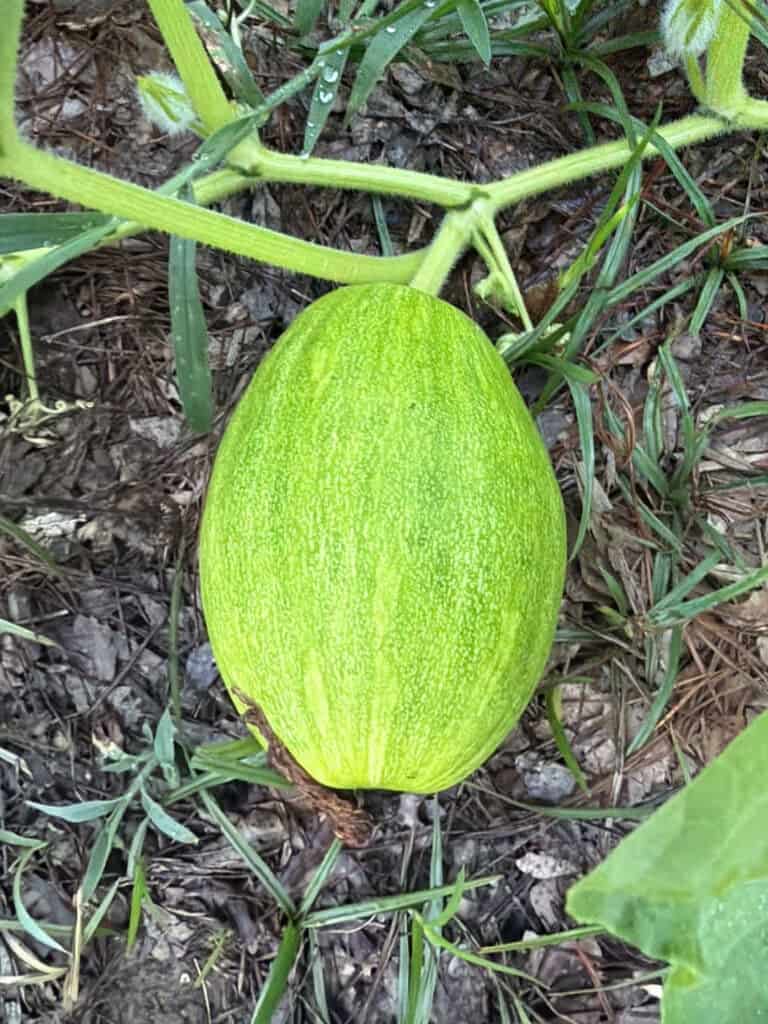
Then I spotted something big and was surprised: one of my first Dickinson pumpkin plants made it, and I have a huge pumpkin.
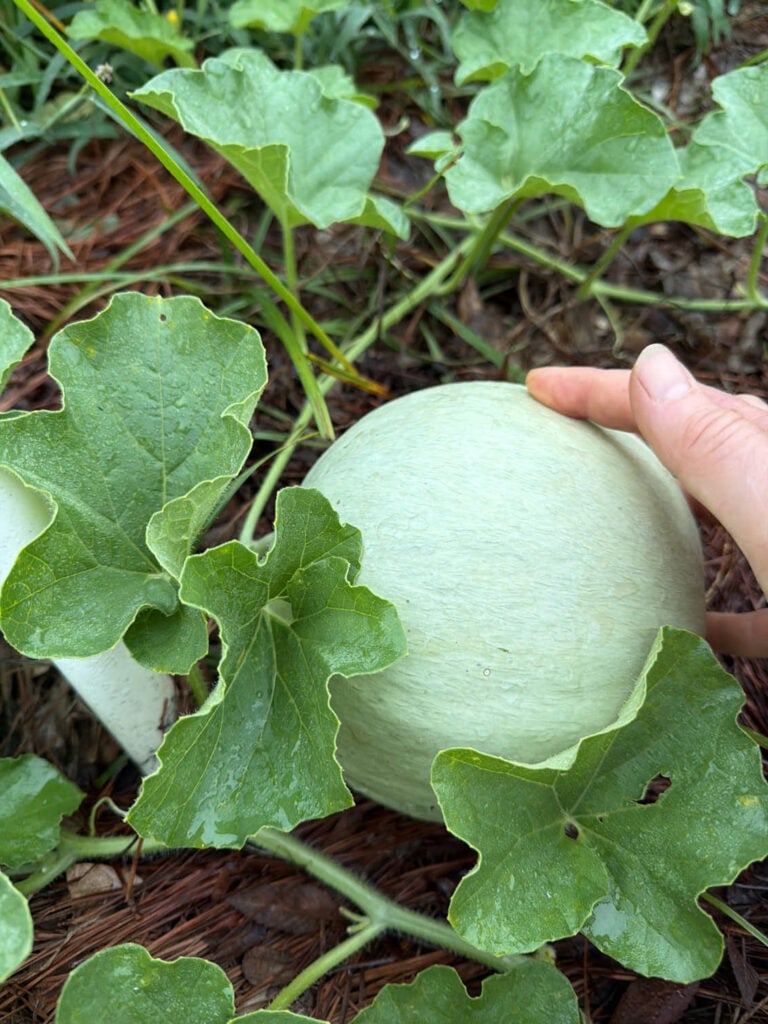
I checked my cantaloupe—there is only one, so I hope the rats don’t get it like they did last year. I’ll spray around it with garlic pepper spray. This cantaloupe is different from the volunteer that came up from my composter.
The cantaloupe I planted was an experiment. I saved seeds from a yummy store-bought cantaloupe. I’m sure that one was a hybrid, because this doesn’t look anything like its skin—but if it’s sweet and tasty, that’s all that matters.
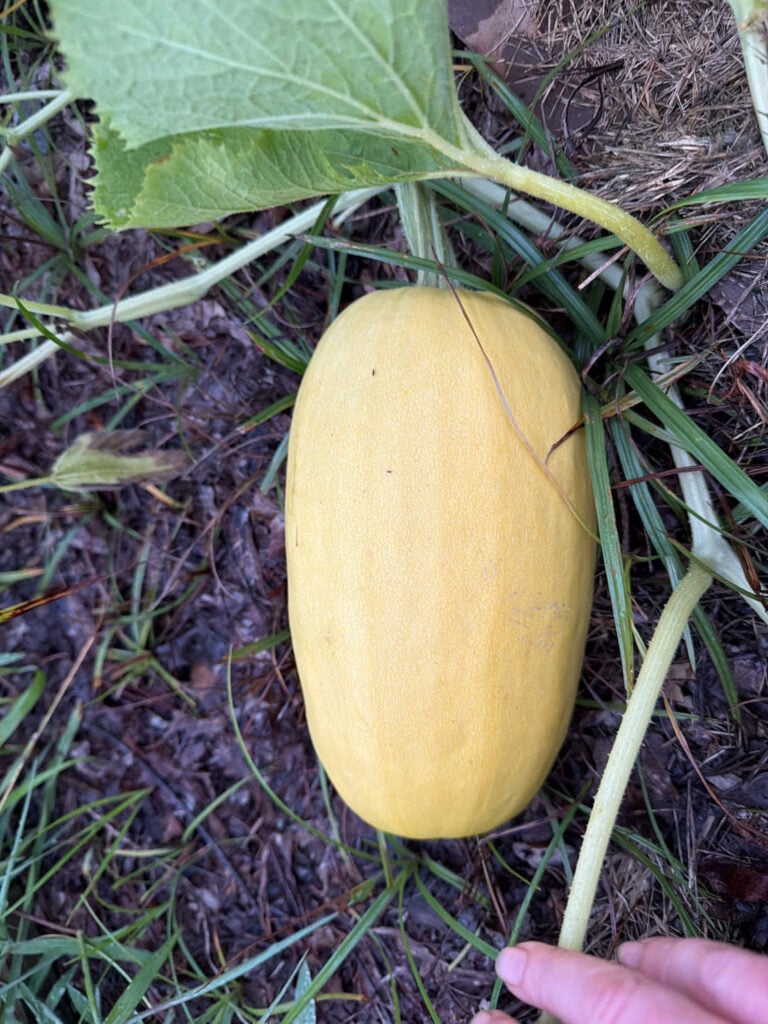
I also checked one of my spaghetti squashes. It’s getting big and yellow, but not quite ripe yet because the stem is still green.
Fall Tomato Planting
After my walk, I started getting ready to plant the five fall tomatoes—1 Big Beef regular, 2 Rio Grande, and 2 false Big Beef Plus. I am officially halfway done. Since I tilled and mounded the planting holes because of water runoff, I didn’t need my drill/auger for any of the fall planting.
I used the same recipe as Monday, with one change: instead of using 1/2 Miracle-Gro water, I gave them SuperThrive, a vitamin nutrient for the roots. I had enough SuperThrive made up, as a little goes a long way—1/4 tsp per gallon of water. I made two gallons because I wanted to give SuperThrive to my cucumbers—Armenian and India.
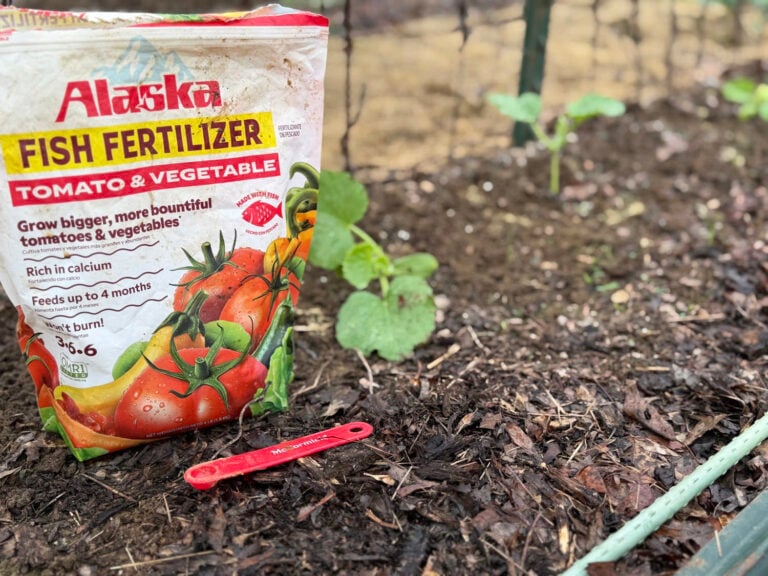
Before giving it to the cucumbers, I also gave each plant 1/4 teaspoon of dried fish fertilizer, two inches away from the stem. I lightly worked it in about 1/2 inch with my claw. While doing this, I noticed something has been chewing on the plants.
Gerald’s July Tomatoes
Once finished, I drove down to Gerald’s plot, as he said I could pick more tomatoes. I filled several canned-goods boxes for Rudy, a neighbor gardener, and my family. Gerald has too many tomatoes and they are rotting on the vines. He said they are almost done and he will start pulling up the plants.
In the gardens, July is the month you can see all the tomatoes dying from a combo punch—septoria and early blight. If you are not spraying a preventative like baking soda or copper fungicide, then your plants are a goner. Maybe that’s why some gardeners don’t plant fall tomatoes. Up north where I was born and raised, we planted after Mother’s Day and didn’t have fall tomatoes because the season was short.
I am planting them a little late this year because of my UK genealogy trip. Next year, the fall tomatoes will be planted mid to late June.
Learning Plot & Disease Care
Picking Gerald’s tomatoes was the break I needed, as it gave me the chance to swing by the Learning Plot to see if anything new was coming up—and yes, I spied some cucumbers and zucchini. I also noticed septoria and blight on the tomatoes there too. I will need to come back with the sprinkling can to lightly water the mounds and trim the bad spots on the tomatoes.
For trimming diseased tomato leaves, I use five things: scissors, paper towel, 70% alcohol, a baggie, and a bucket. The routine is to wipe the scissors between plants to help keep from spreading fungus. I also wipe my hand that touches the plant. The diseased leaves and stems go directly into my bucket. On my way home, I dump the bucket in the community vegetation pile that the county picks up once a month, as diseased plants should never go in your compost.
Rabbit & Fence Check
Again, I encountered the rabbit in my garden. I saw part of my rabbit fence was not fastened to the post and wondered if this is where he is getting in. I don’t see any sign that this is it. It might be on Rudy’s south fence. It is so overgrown in the next plot that I can’t walk that fence. I tried leaving both gates open in hopes he would leave on his own. I am not sure how to get him out.
Harvest & Garden Notes
I was going to start cutting the Bocking 14 to put around my fall tomatoes, but the humidity was getting to me, so I decided to pick instead. I picked cucumbers and okra. Since my okra row is about 80 feet, I use my garden stool and listen to YouTube garden videos while picking. There are a lot of good no-cost ideas of how your grandma gardened—simple things like using spent coffee grounds for a little nitrogen and soil structure. I want to try how grandma grew potatoes; it is chock full of ideas and zero cost.
Once done, I went back to the Learning Plot and spent about 20 minutes trimming the tomatoes of diseased leaves and limbs. Then I watered the mounds with the sprinkling can, and on my way out, I dumped the bucket in the vegetation pile.
Planning in My Dreams
I am so happy I am now at the halfway point with the fall tomatoes. Once they are completed, I can plant pole beans where the other cucumbers are not thriving. I still have on my To‑Do List to move the cages and keep the best 28–30, then create the new fall bed. As always, I finish one project and move right on to the next planned one. I think I make plans in my dreams, because I am always busy in the Pickle Patch.