
Learning Plot
Hot, humid day with a few clouds and maybe some rain later this evening. Low 76, High 93.
I usually go to the Learning Plot first, but today I stopped at my shed in the Pickle Patch to get the 8‑24‑24 I forgot yesterday and to check if anything else had germinated in the mounds. It didn’t take long to fertilize, and then I inspected the mounds. It has been seven days, and still no yellow or zucchini squash are up, and germination is sporadic in the cucumber and watermelon mounds too. Is it just too hot to germinate? I’ve kept everything watered unless Mother Nature did it for me. Could it be the seeds? I bought them this year from two places — Walmart and the Stewart Brothers.
Either way, I popped more seeds into all the mounds except the sunflowers. For those, I decided to take a few sunflower seeds from the bird feeder since sunflowers are already sprouting underneath it — clearly good germinating seeds.
I also picked some of the False Beef Plus tomatoes that are about the size of golf balls. They are tasty in salads or as a snack. Lately I have been sending all of them to the church drive‑thru pantry and the feedback on them has been wonderful. Maybe God knew those tomatoes were just what I needed for the church instead of the Big Beef Plus.
Produce From Neighbor Gardeners
Once done, I headed back to my plot and ran into the gardeners next to Sammy’s plot. They asked if I wanted beets and butternut squash, and I said sure. The butternut can sit in my hearth room, which has basically turned into a produce and germinating room. We really don’t use that room until Christmas. I have the produce on the paper‑lined table with the ceiling fan above on the lowest setting. It runs all the time to help keep air circulating for produce that sits out, like tomatoes.
The beets can sit out a few days, and I’ll need to design a meal around them. They were the last of their beet crop. They pickle theirs and said she’ll need to give me her recipe for next year.
I planted beets myself, but when I harvested, I wasn’t sure they were still good since it was late June and I planted before March 15th. I asked James at the time because this was only my second time growing them, and I wasn’t sure. He said they were good, so I processed them — meaning boiling them. I purposely didn’t use salt in the water because I wanted to give the beet water to my cucumbers as a nutrient drink. Once boiled, I slipped off the skins with latex dental gloves (or your hands will be beet red). I selected the ones I needed for my recipe and IQF’ed the rest.
Tilling
After I got their garden produce, I started figuring out how I was going to prepare the PP tomato bed. It was weedier than I expected and the weeds were hard to pull out. The easiest way was to scalp them with the weed‑whacker and then rake some of it out of the beds.
Instead of pulling off the mulch — a combination of chopped leaves and pine needles that has covered the bed for six months — I decided to till it all in. It should be broken down enough that it won’t take nitrogen away from my tomatoes.
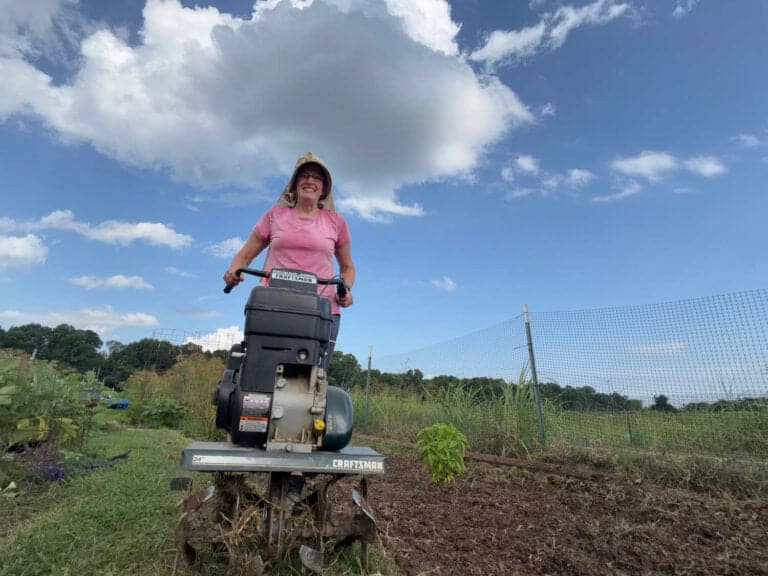
I used my Sears Craftsman tiller, which has to be about 30 years old. I think we bought it when we were living in Michigan. Besides changing the oil (which will need to be done this year), I’ve replaced the belt and the drive cable. I think when I bought the two parts it was under $20.
Mound Construction
Once I was done tilling, I raked the bed again to smooth it out and pull out more weeds and roots. Then I measured six spaces for the tomatoes, spaced like before — five feet apart. I know you can do 24 inches, but with this humidity I want to make sure they get good airflow. The wider spacing also lets me tuck the four marigolds in between and direct‑sow some flowers.
In another log I mentioned how water flows through my plots, so this time I was prepared. Just like in the Learning Plot, I made mounds that were 18–20 inches in diameter and about four inches high.
Since the tomatoes need a few more days to harden off and rain is coming, I decided to protect the mounds. I reused my black construction bags from chopped leaves over each mound, and then on top of the plastic I put the cardboard boxes I need to soften. They’re much easier to work with when wet — the tape peels off and the staples cut or tear out easily. The boxes will eventually go to the Back 40, where I still have half a row to finish and a few other areas that need box touch‑ups. That darn nut grass punches through one layer, which I didn’t know it could do.
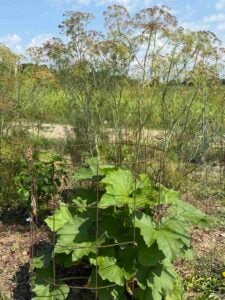
I was so hot from all the tilling and mound construction that I only picked the cucumbers — and I remembered the dill.
Nancy’s To‑Do List
Continue to prepare the rest of the holes (16)
Planting starting on Monday
Spray basil with baking soda
Check if I have extra plants for Sammy; if so, prepare his plot
Can dill pickles and some spicy pickled okra
Closing Thought
Even though I scalped the weeds to make it easy so I can get to tilling, I know those weeds like nutgrass will be back and I’ll have to be on top of it — either quickly doing a five‑minute weeding or just start boxing it like the rest of the garden to snuff ’em out for good! Gardening out in the community gardens is nothing like gardening in your back yard—more protected.