
A partly sunny day with a low of 70°F and a high of 90°F. I am catching up on what I’ve done over the weekend.
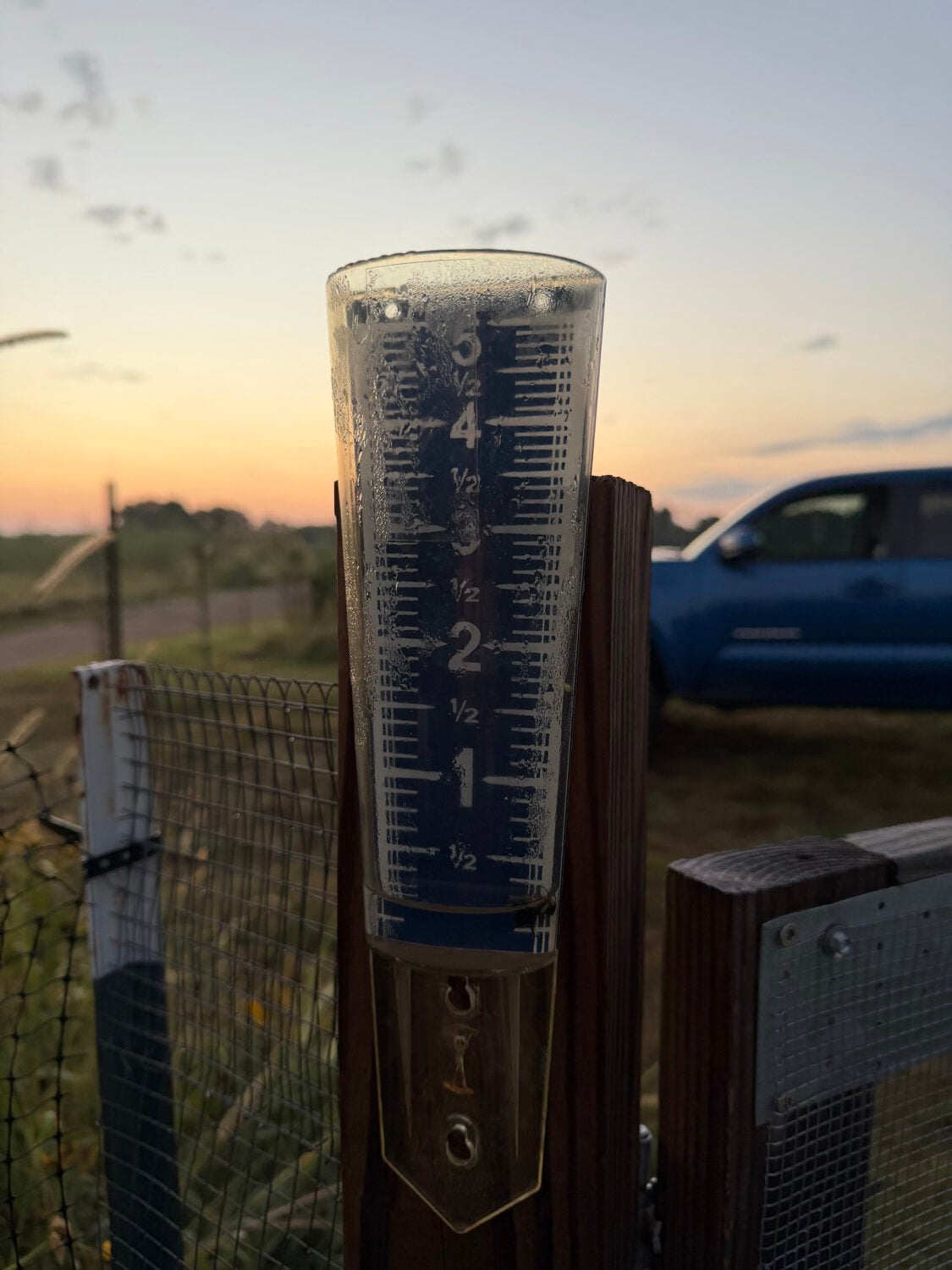
One other thing to note about the weather was the sudden storm that came through with 70 mph straight‑line winds on Saturday evening. Some cities received 3 inches of rain and other areas lost power, and will take a few days to restore. I can sympathsize as a few years back that happened to us and we were without power for almost a week. I blogged about. If interested here is the link. My rain gauge reported only 1/4 inch. I also captured a little bit of the sunrise too!.
The gardens only had a few tomato cages knocked over, and my shade cloth ripped away from the clothespins. I quickly fixed everything.
Over the weekend I worked steadily on my fall bed to have it ready for the full moon. I never used to think about planting by the full moon, but many gardeners in the community gardens do. They swear certain crops respond better when planted around that time. The Old Farmer’s Almanac also notes that the days just before and after the full moon can be beneficial for specific types of plants. So while I wasn’t intentionally planning by the moon, some of my dates may have simply lined up with it.
As far as dates, I go by the general dates from the UT Extension, and if you want to see the UT Extension dates or my other favorite gardening links, click here. A couple of things to remember when planting your seeds:
Date to maturity or harvest
Frost date
Once you have these, count back and add two weeks longer because of light and cool temperatures.
In mid‑July I started cucumbers, watermelons, and yellow and zucchini squash. The watermelons — there are at least 8+ watermelons that are a good size. I am about to get zucchini. The only really late plants are butternut squash right at the tail end of July. I’ll let you know how they do.
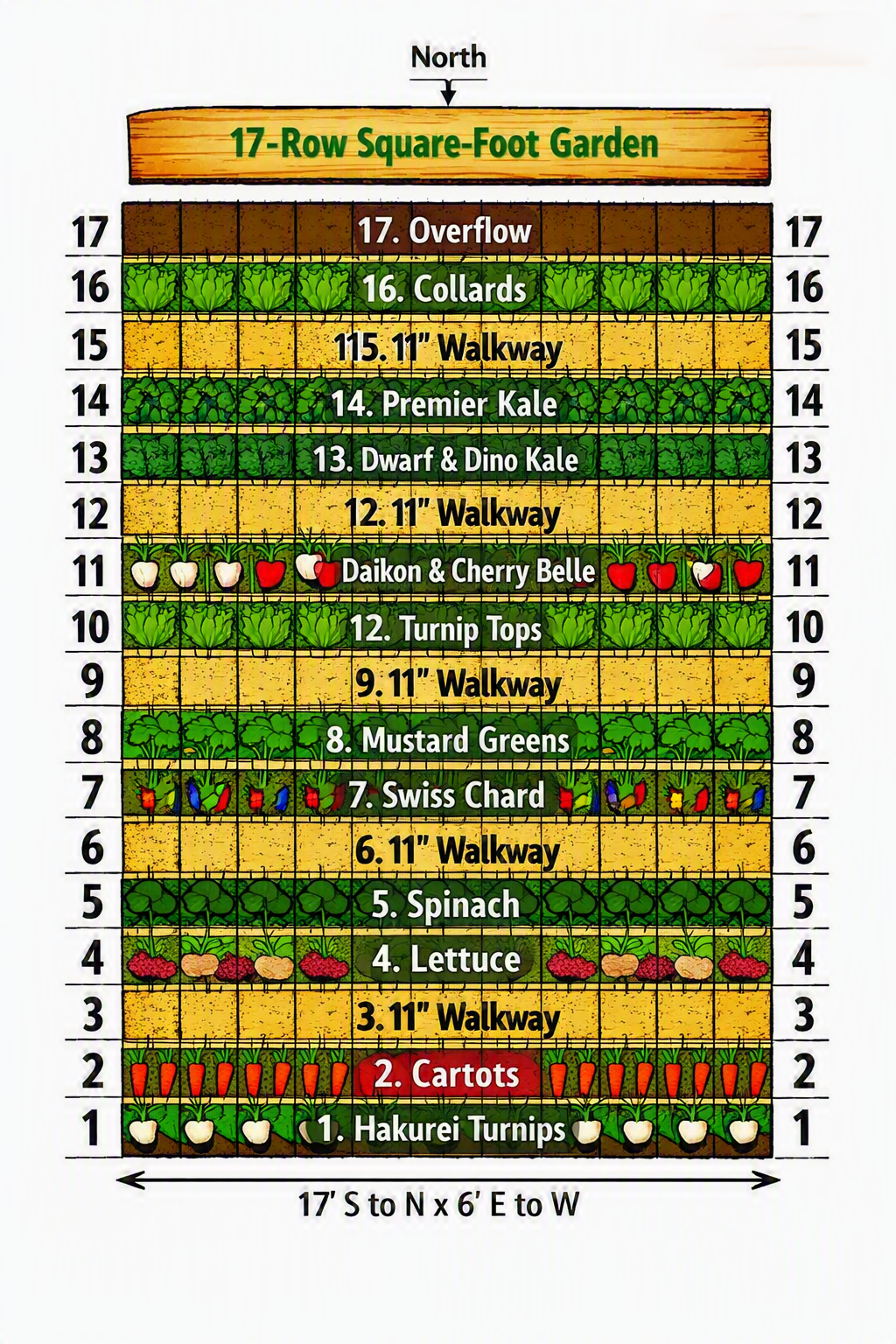
My fall bed is 17′ x 6′, and I am using my 1′ x 1′ square seed planter. The spacing is dictated based on the listing on the seed planter. For crops like kale and collards, I used the blue holes to increase the chances of germination. If I need to thin, I’ll move extras to overflow or another part of the garden. I planted multiple seeds in each hole based on how old the seed was, just to ensure I’d get at least one to sprout. When thinning, I’ll cut them with scissors so I don’t disturb the roots.
I planted the rows back‑to‑back with an 11′ cardboard walkway covered in straw. The only seeds I’m not planting as full rows — and will succession plant instead — are Hakurei, carrots, lettuce, spinach, mustard greens, turnip greens, and radishes. I planted two squares of each, and the other two will follow every 7–10 days.
That way I won’t have the whole row ready at once, and if something doesn’t germinate, like spinach sometimes does, I can replant and still finish the full 6 feet. I’m not sure what I was thinking when I wrote 9/10 for spinach in my plan, because I pre‑sprouted them in a damp paper towel in the refrigerator for 2–3 days and they were ready early.
Because it is still hot, I am watering the seeds and then placing a wet cardboard on top to help cool the soil. I hope it works. It worked last year for radishes, so fingers crossed. If it doesn’t, I wait a little bit more and start again. I will try to take a photo on Wednesday, and some crops like mustard seed could be up.
While I was working on the fall bed, I was interrupted and had to show a new gardener their new 25′ x 25′ plot. They originally wanted a 25′ x 100′, but while talking they mentioned that the guys near this plot were going to help them, they didn’t have their own tiller, and they had health issues — one is recovering from knee surgery and didn’t get out of the car today because it was hurting. I told them not to count on people helping and that it is better to get your feet wet with the small plot and then come spring upgrade to the larger plot.
I gave them the rules and told them that in 4 weeks they have to be planted, as that is what it states in the rules. People think it is so easy out here, but it is not — weeds and disease spread like wildfires here. You must have a plan. Even in my garden I am working on weeds. I let them know they can get started today. Hopefully I will see them in the next few days, as I will be passing by it to go to the Learning Plot.
As I was heading back to my gardens, Bobby flagged me down. He told me there was a brown furry dead animal that was headless and stuck in the fence. He said it wasn’t a deer — by the feet it was either a dog or a wolf. Bobby wanted to know if a county worker could remove it, as the wind was blowing the smell right to their gardens.
I told him I would find out. I asked the county manager for the community gardens if we have a department that does that, and she said yes. I told her the plot and gave the description for the location, including landmarks like the fig tree. I could see it from where I was talking to Bobby, about 70–80 feet away.
After all that, I went back to my gardens, finished up, and started watering. Then I harvested okra and cucumbers for tomorrow’s church drive‑thru pantry.
What a day, but I got everything done. I just need to water tomorrow before documents, and I am thinking I might have time to weed‑whack the Learning Plot, as I haven’t done it in a couple of weeks.
Headless dead animals, new gardener woes — just another day in the Pickle Patch.